
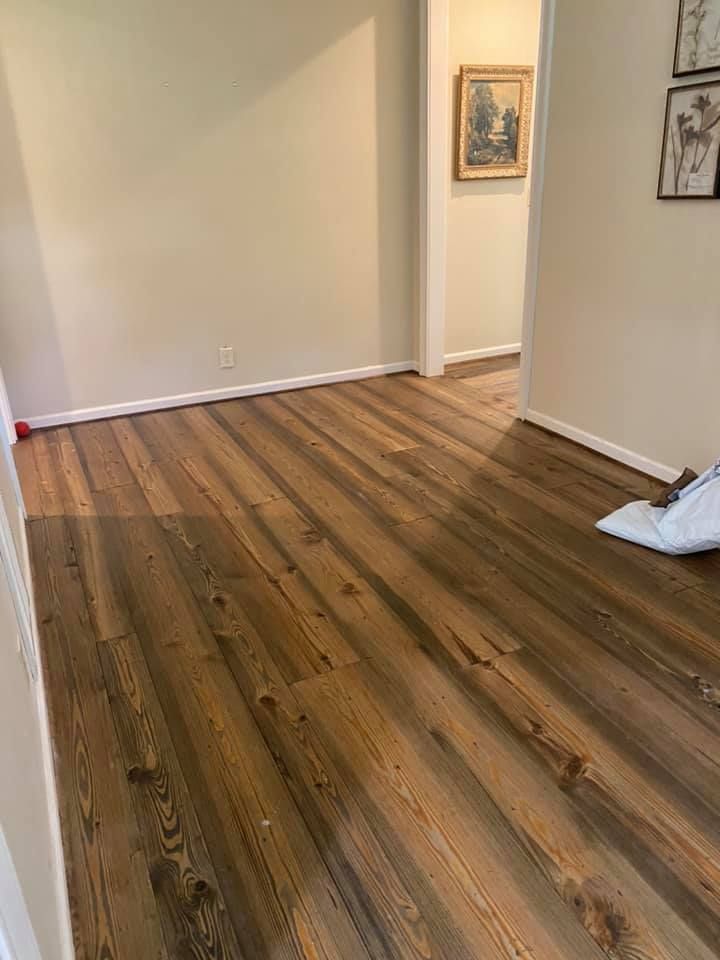
Vinyl Planks That Last Through Seasonal Shifts
LVP Flooring Installation in Smiths Station for homes where humidity fluctuations demand moisture-resistant solutions
Seasonal moisture changes in Alabama cause traditional flooring materials to expand during summer humidity and contract in drier winter months. Happy Dayz Flooring installs luxury vinyl plank flooring designed to handle these conditions without the warping or gap formation common with wood products. LVP floating systems move slightly as temperatures shift, which is why proper expansion gap installation along walls and transitions matters for long-term stability.
Before planks go down, we inspect your subfloor for telegraphing issues where imperfections show through the vinyl surface after installation. High spots get ground down, low areas receive leveling compound, and we verify the surface sits flat within manufacturer tolerances. This preparation step determines whether your finished floor looks smooth or reveals every subfloor flaw.
Request a detailed estimate based on your current subfloor condition and the specific LVP product you're considering.
How LVP Addresses Alabama Humidity Problems
Installation begins with subfloor telegraphing checks using straightedges that reveal deviations invisible to the eye but visible through vinyl once installed. We place underlayment that cushions the floating system, then lock planks together with expansion gaps measured to accommodate the maximum seasonal movement expected in Alabama's climate. These gaps hide under baseboards and transition strips, allowing the floor to shift without buckling.
After we finish, your floor sits level without lippage between planks, seams lock tightly without separating when you walk across them, and the surface remains flat through summer humidity spikes and winter heating cycles. Moisture from mopping or spills sits on the surface without penetrating seams or causing plank edges to lift.
Our installations include transition strips at doorways where LVP meets other flooring types, quarter-round or shoe molding that conceals expansion gaps along walls, and instructions for maintaining gaps if you later replace baseboards. Floating floors need room to move, and covering expansion gaps with caulk or tight-fitting trim causes the buckling issues LVP is meant to prevent.
Answers to Frequent Service Questions
LVP installations in Smiths Station raise questions about preparation requirements and how vinyl planks perform compared to other materials.
What is subfloor telegraphing and why does it matter?
Telegraphing occurs when subfloor imperfections show through the vinyl surface after installation, creating visible ridges or depressions that become more noticeable over time, which is why we grind high spots and fill low areas before laying planks.
How wide should expansion gaps be for Alabama installations?
Gap width depends on the room dimensions and the specific LVP product, but we typically maintain quarter-inch gaps along walls and vertical surfaces to allow the floating floor to expand during high-humidity months without pushing against fixed objects.
Why does LVP work better than hardwood in humid climates?
Vinyl planks contain no organic material that absorbs moisture and swells, so they remain dimensionally stable through humidity changes that cause hardwood to gap or buckle depending on the season.
What happens if expansion gaps are too small?
The floor can't move as temperature and humidity shift, causing planks to push against walls or cabinets and buckle upward in the center of the room where pressure accumulates.
How long does LVP installation take for a typical room?
Installation speed depends on subfloor condition and room layout, but straightforward installations with minimal cuts around obstacles typically finish faster than glue-down systems or materials requiring acclimation periods.
We've been installing flooring in Alabama since 1978, and we do what we tell people we're going to do. Happy Dayz Flooring works Saturdays by appointment if weekday scheduling doesn't fit your availability—call (334) 540-4326 to discuss subfloor preparation needs and review LVP options suited to your home's moisture conditions.