Tile That Stays Level Despite Soil Movement
Tile Flooring Installation in Smiths Station for bathrooms and kitchens where Alabama's red clay soil creates substrate challenges
Red clay soil expands and contracts with moisture changes, transferring movement to your home's foundation and the substrate beneath tile floors. Happy Dayz Flooring applies waterproof membranes and uses tile leveling systems that keep ceramic and stone installations flat even when minor substrate shifts occur. We prepare the substrate before setting tile because the surface beneath determines whether grout cracks or tiles develop lippage within the first year.
Substrate preparation involves checking for flexion in wood subfloors, verifying concrete slabs sit level within tolerance, and applying crack isolation membranes in areas where soil movement historically causes foundation stress. Waterproof membrane goes down in wet areas like showers and around toilets, creating a continuous barrier that stops water from reaching the substrate even if grout joints develop hairline cracks later.
Arrange an on-site consultation to assess substrate conditions and identify waterproofing requirements for your tile project.
What Changes After Professional Tile Installation
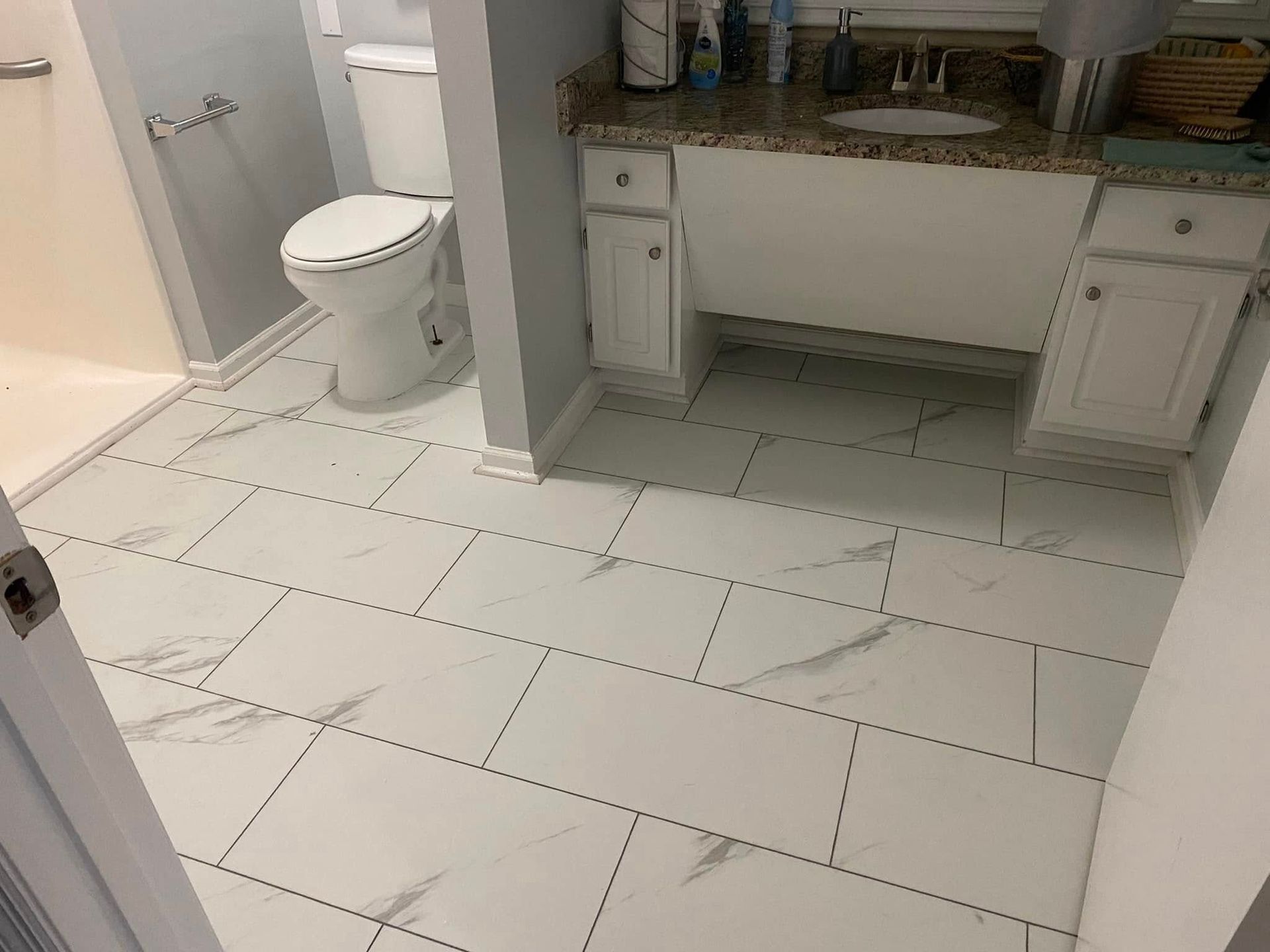
We use tile leveling systems during installation, inserting clips under tile edges that pull adjacent tiles to the same height while thinset cures. This process eliminates lippage where one tile edge sits higher than its neighbor, creating a tripping hazard and making floors difficult to clean. Grout joints receive proper spacing, waterproof membrane extends up walls in wet areas, and we verify the finished surface drains toward floor drains in shower installations.
Once installation completes, your tile surface sits uniformly flat without edges that catch mop heads or bare feet, grout lines run consistent in width and depth, and water flows toward drains instead of pooling in low spots. Tile that's properly set on stable substrate won't develop hollow spots that crack when you step on them or loose tiles that shift under foot traffic.
The work includes sealing porous stone tile if your material selection requires it, caulking joints where tile meets tubs or walls to allow movement without cracking rigid grout, and explaining which grout types need periodic sealing to resist staining. We've worked through Alabama soil conditions for over four decades and know which substrate preparation steps actually prevent the callback issues common with rushed installations.
Common Questions About This Service
Tile installations in Alabama raise questions about substrate preparation, waterproofing techniques, and how soil movement affects long-term performance.
Why does Alabama red clay require special substrate preparation?
Red clay soil swells when wet and shrinks during dry periods, causing foundation movement that cracks tile or grout if the substrate can't flex slightly to absorb stress without transferring it directly to the tile surface.
What is a tile leveling system and when is it used?
Leveling systems use clips inserted under tile edges before thinset cures, holding adjacent tiles at the same height to prevent lippage, and we use them on every installation to maintain a flat surface that meets industry standards.
How far up the wall does waterproof membrane extend in showers?
Membrane extends to the height of the showerhead at minimum, covering the entire wet area where water spray hits walls during normal shower use, and we overlap seams and seal penetrations to create a continuous waterproof layer.
What causes grout to crack within the first year after installation?
Substrate movement from soil shifts, insufficient thinset coverage that creates voids under tiles, or using rigid grout in joints that need flexible caulk are the most common causes of premature grout failure in Smiths Station installations.
When should I seal grout joints after tile installation?
Grout typically cures enough for sealing within a few days after installation, but the timing depends on humidity levels and grout type, and we provide specific instructions based on the products used in your installation.
Happy Dayz Flooring is locally owned and licensed, working in Alabama since 1978 with substrate and waterproofing methods proven through decades of soil and moisture challenges. Call (334) 540-4326 to schedule a consultation where we'll evaluate your substrate and discuss tile options appropriate for your project's moisture exposure.