Seamless Surfaces That Handle Red Clay Tracking
Sheet Vinyl Flooring Installation in Smiths Station for commercial spaces and homes where Alabama's red clay demands easy-cleaning, durable floors
Alabama red clay tracks indoors on shoes and equipment, grinding into seams and grout lines in traditional flooring where it's difficult to remove completely. Sheet vinyl eliminates seams across most residential and small commercial spaces, providing a continuous surface that mops clean without dirt accumulating in joints. Happy Dayz Flooring installs sheet vinyl using heat welding techniques for seams that must occur in larger spaces, creating watertight joins that function like a single piece of material.
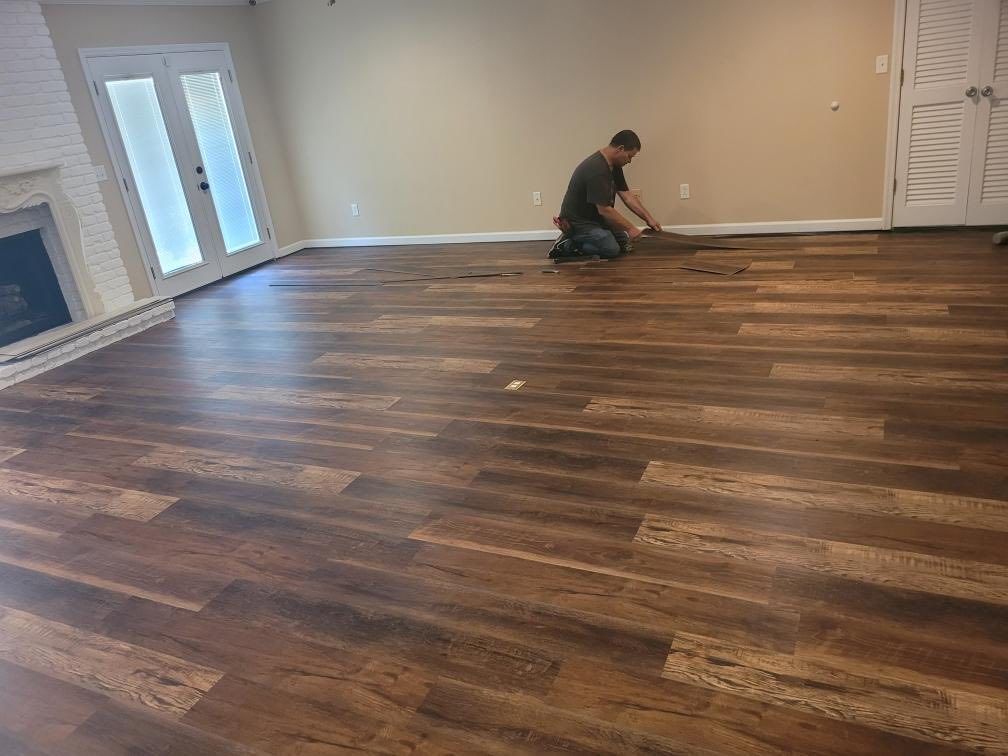
Installation begins with subfloor preparation identical to what LVP requires—high spots ground flat, low areas filled with leveling compound, and the surface verified smooth within tolerance. Sheet vinyl telegraphs subfloor imperfections more visibly than thicker flooring products, so preparation determines whether your finished floor looks smooth or shows every flaw underneath. We cut vinyl to room dimensions, fit it against walls and around obstacles, then apply adhesive or install it as a loose-lay system depending on the product and space requirements.
Request a consultation to review your subfloor condition and discuss sheet vinyl products appropriate for your cleaning and durability needs.
Why Heat Welding Works for Commercial-Grade Installations
When room dimensions exceed sheet vinyl width and seams become necessary, we use heat welding to join edges. A hot air tool melts welding rod into the groove between vinyl sheets, fusing them into a continuous surface once cooled. This creates seams stronger than the surrounding material, preventing edges from lifting or allowing moisture underneath even with frequent mopping or equipment washing.
After installation, you'll notice the floor surface runs continuously without visible seam lines when heat welding is done correctly, water pools on the surface without penetrating joints, and red clay mud mops away completely without residue trapped in grout lines or seams. The material resists scuffing from dragged equipment better than residential-grade vinyl, making it suitable for workshops and commercial spaces where durability matters as much as easy cleaning.
We trim vinyl tight against walls where baseboards will conceal edges, seal perimeters in wet areas to prevent moisture from migrating under the sheet, and verify heat-welded seams sit flush without ridges that catch mop heads. Commercial installations include considerations for rolling loads, chemical exposure, and cleaning frequency that residential products aren't designed to handle.
Questions Before Starting Your Project
Sheet vinyl installations raise questions about seaming techniques, subfloor requirements, and how the material performs in Smiths Station's climate and soil conditions.
What is heat welding and when is it necessary?
Heat welding uses a hot air tool to melt vinyl welding rod into the seam between sheet edges, creating a watertight chemical bond, and we use it in commercial installations or large residential spaces where seams can't be avoided.
Why does sheet vinyl work better than tile for tracking red clay?
Sheet vinyl provides a seamless surface where dirt can't accumulate in grout joints, allowing complete cleaning with a mop, whereas tile grout traps Alabama red clay particles that remain visible even after scrubbing.
How flat does the subfloor need to be for sheet vinyl installation?
Subfloor flatness tolerances are tighter for sheet vinyl than for thicker flooring products because the thin material telegraphs imperfections easily, and we verify surfaces sit flat within manufacturer specifications before installation begins.
What is the difference between residential and commercial-grade sheet vinyl?
Commercial products use thicker wear layers and reinforced backing that resist damage from rolling loads and frequent cleaning, while residential vinyl prioritizes appearance and comfort underfoot over maximum durability.
How do heat-welded seams compare to regular vinyl seams?
Heat-welded seams create a permanent chemical bond stronger than the surrounding material, preventing edge lifting and moisture penetration, while standard seams rely on adhesive alone and remain vulnerable to separation if moisture reaches the joint.
Happy Dayz Flooring brings commercial-grade seaming techniques and custom cutting methods to sheet vinyl installations in Alabama. We're locally owned, licensed, and we've handled everything from residential kitchens to commercial workshops since 1978. Call (334) 540-4326 to set up an evaluation where we'll assess your space and recommend sheet vinyl products matched to your traffic and cleaning requirements.